

Every time you blink, your healthy eyes get a bath from a fluid that’s a combination of oil, water, and mucus. This fluid, or tears, helps protect and moisturize the eyes. When something irritates your eyes or interferes with the production of tears, it can result in irritated dry eyes that are vulnerable to corneal abrasions.
Dry eyes are actually very common. According to Prevent Blindness, nearly 16 million Americans suffer from this annoying and sometimes painful condition. If you think you have dry eyes, check out some of these common symptoms and possible causes. Once you drythe culprit, you can begin to make changes to relieve your dry eyes, once and for all.
Symptoms of Dry Eyes:
- Dry, itchy, or burning eyes
- A scratching sensation, or feeling like there’s grit in the eyes
- Sensitivity to light causing squinting and blinking
- Difficulty focusing because of dryness
- Both eyes are usually affected
- Watery eyes (a little-known fact!)
How to Treat Dry Eyes:
- Avoid drafts and use a humidifier to put moisture back into dry air.
- If allergies are causing your eyes to itch and dry out, try lubricating, preservative-free eye drops formulated for people with allergies.
- Check the side effects of your medications. If you’re taking one that causes dry eyes, your doctor may need to change your prescription, or she may recommend that you begin using eye drops to lubricate your eyes.
- Don’t wear your contacts for too long, keep them clean, and always wash your hands before handling them.
- Take frequent breaks from computer work or reading, and keep your eyes lubricated by remembering to blink often.
- Turn off ceiling fans when possible.
- Lay a warm, damp washcloth across your eyelids for a couple minutes.
- Ask your doctor about punctal plugs which block tears from draining from the eye.
Helpful Tips:
- For a refreshing sensation, cool your eye drops in the refrigerator about an hour before using them.
- Check expiration dates on your eye drops.
- Never share eye drops.
- Drink plenty of water.
- Wear sunglasses outside to protect your eyes from wind and sun.
With a few simple changes you could begin to notice a real improvement. If after one month your eyes are still bothering you, make sure to see your eye doctor—severe cases can lead to eye damage and vision loss. During your eye exam, your doctor can check for vision problems and signs of health conditions that could be causing your dry eyes. An accurate diagnosis is important because symptoms of dry eye can be caused by other things like allergies or uncorrected refractive error or astigmatism.
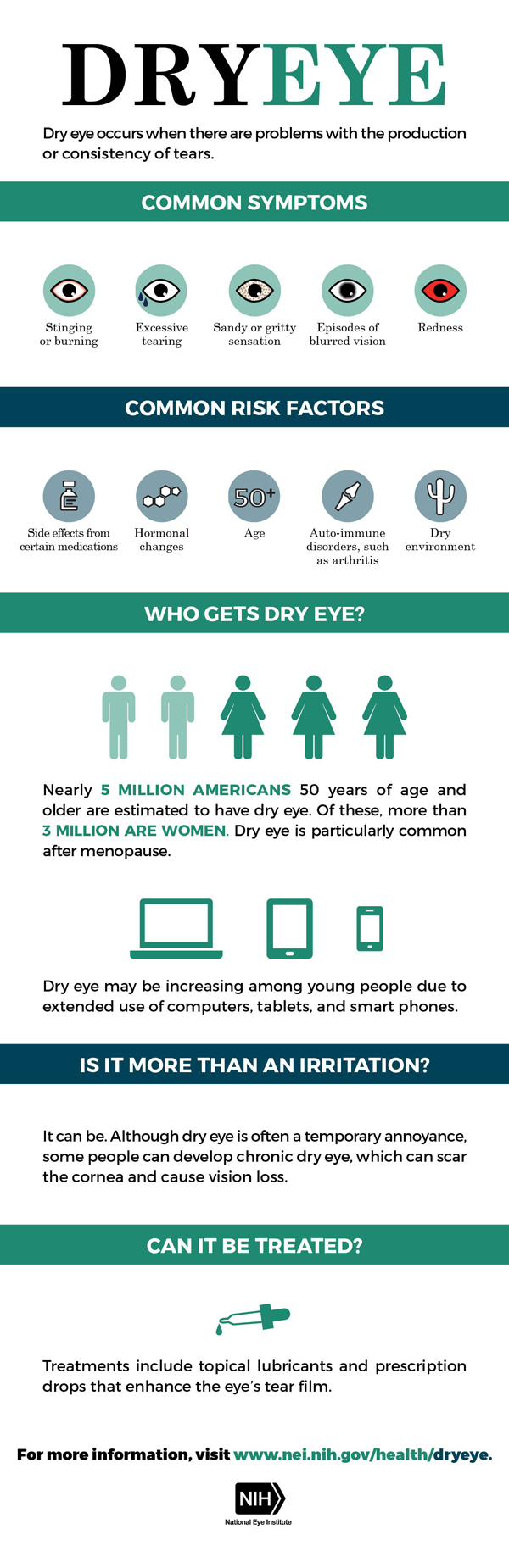 Common symptoms of dry eyes can be stinging or burning eyes. This can be accompanied with excessive tearing and a a sandy or gritty sensation; or episodes of blurred vision and redness. Some of the risk factors for dry eyes are age, hormonal changes, side effects from certain medications and auto-immune disorders, such as arthritis. Nearly 5 million Americans 50 years of age and older are estimated to have dry eye. Of these, more than 3 million are women . Dry eye is particularly common after menopause. Dry eye may be increasing among young people due to extended use of computers, tablets, and smart phones. Treatment include topical lubricants and prescription drops that enhance the eye’s tear film.